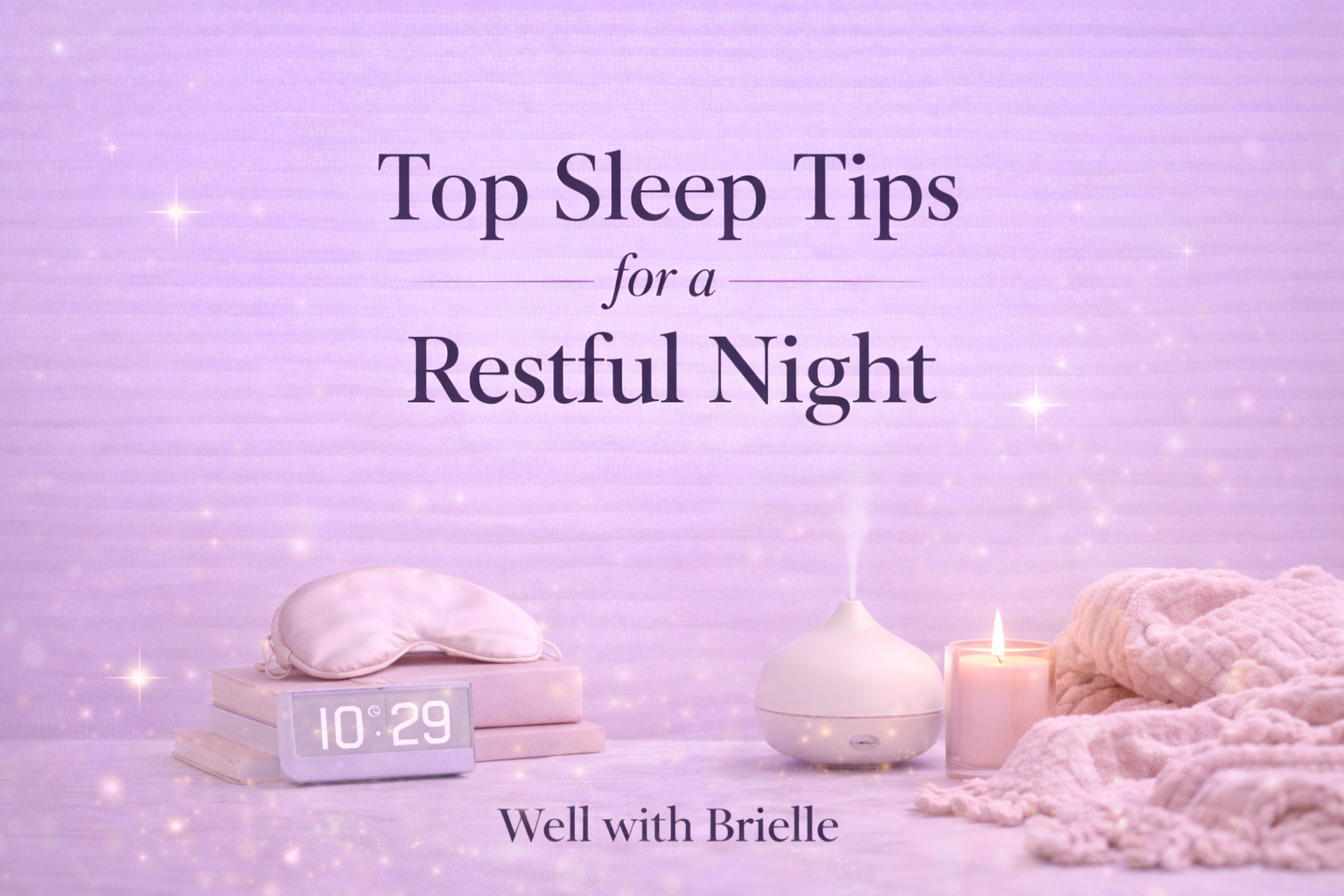
Top Sleep Tips for a Restful Night
This post may contain affiliate links, which means if you click them, I may earn a small commission, at no extra cost to you.
Top Sleep Tips for a Restful Night | Well With Brielle
Sleep is foundational to wellness, beauty, and mental clarity.
Moreover, quality sleep impacts how your body heals, how your skin looks, and how calm or overstimulated your nervous system feels each day.
When sleep is supported intentionally, everything else in your routine works better.
This guide shares practical, science backed sleep tips designed to support deeper rest, calmer nights, and more consistent sleep quality.
These sleep tips focus on routines, environment, and nervous system regulation so you can improve sleep without overcomplicating your evenings.
As a result, these sleep tips are designed to fit seamlessly into your existing routine rather than adding pressure or complexity.
Table of Contents
Why Sleep Quality Matters
The Role of Sleep Stages in Restorative Sleep
How Sleep Impacts Hormones, Skin, and the Nervous System
My NonNegotiables for Restful Nights
Why Temperature and Timing Matter for Sleep
Sleep Products That Actually Help
Nervous System Regulation Before Bed
How Stress Accumulates — and How Sleep Helps Reset It
How I Create a Calm Nighttime Routine
Why Consistency Matters More Than Perfection
What to Do When Sleep Still Feels Elusive
Sleep Questions I’m Often Asked
Final Thoughts on Quality Sleep, Rest and Recovery
What helps you fall asleep faster—routine, environment, or products?
Leave a comment below — I’d love to know.
Top Sleep Tips
Sleep quality is about consistency, environment, and nervous system regulation—not perfection.
For example, small, intentional choices each evening add up to deeper rest over time.
Below, I’m sharing the habits I treat as nonnegotiable when I want to protect my energy and, ultimately, wake up feeling restored..
These sleep tips are meant to be realistic, supportive, and easy to maintain long term, especially if you struggle with inconsistent sleep or nighttime overstimulation.
I hope you find these sleep tips helpful!
Keep reading for sleep tips on creating a calmer, more restorative sleep routine!
Why Sleep Quality Matters
Quality sleep supports hormone balance, immune function, mental clarity, and emotional regulation.
When sleep is disrupted or inconsistent, it often shows up as low energy, mood swings, brain fog, or skin issues.
Prioritizing rest isn’t indulgent—it’s foundational self-care that supports every other wellness goal.
For this reason, understanding how sleep works helps explain why these sleep tips are so effective.
Shop My Sleep Essentials (This Entire Post)
A curated collection of the sleep essentials I use to support deeper rest, calmer nights, and a more elevated bedtime routine.

The Role of Sleep Stages in Restorative Sleep
Sleep quality isn’t determined by hours alone — it’s shaped by how smoothly the body cycles through different stages of sleep. Throughout the night, the brain moves through light sleep, deep sleep, and REM sleep in repeating cycles.
Deep sleep is especially important for physical restoration.
For instance, this stage supports immune function, muscle repair, and cellular regeneration.
When deep sleep is shortened due to stress, late nights, or overstimulation, the body may struggle to fully recover, even if total sleep time looks adequate.
REM sleep, on the other hand, plays a key role in emotional processing, memory consolidation, and creativity.
Disruptions to REM sleep can show up as irritability, difficulty concentrating, or feeling mentally “foggy” the next day.
Consistent routines, low stimulation before bed, and a calm sleep environment help support smoother transitions through these sleep stages, allowing rest to feel more complete and restorative.
With this in mind, supporting healthy sleep stages requires more than just time in bed.
Related:
Voluspa Scent Haul: Amazing Scents, Beautiful Gifts
My Non Negotiables for Better SleeP
A consistent bedtime helps regulate your circadian rhythm and trains your body to wind down naturally.
Low lighting in the evening signals melatonin production and reduces overstimulation.
A calm, uncluttered sleep environment makes it easier for your nervous system to fully relax.
When these three things are in place, falling asleep becomes easier and more natural.
Consistent Bedtime
A consistent bedtime helps regulate your circadian rhythm, which controls sleep-wake cycles, hormone release, and body temperature. When bedtime varies significantly, the body can struggle to anticipate sleep, making it harder to fall asleep and wake up feeling refreshed.
Over time, consistency trains the brain to release melatonin naturally in the evening, allowing sleep to feel more automatic rather than forced.
Low Lighting
Evening light exposure has a direct effect on melatonin production.
Bright or blue-toned light can suppress melatonin, signaling to the brain that it’s still daytime.
By lowering lights and choosing warm, soft lighting at night, you help your nervous system transition into a relaxed state, making it easier to unwind.
Calm Environment
Overall, your sleep environment acts as a signal to your brain.
Clutter, noise, or visual stimulation can subconsciously increase alertness, while a calm, minimal space supports relaxation.
Additionally, soft textures, low noise, and a cool room temperature all help promote deeper, more restorative sleep cycles.
Together, these nonnegotiables work best when they’re approached consistently rather than occasionally.
Shop Sleep Basics
Silk pillowcase or bedding
Soft eye mask
Low light bedside lamp
Have you noticed how your sleep affects your mood or energy the next day?
Leave a comment below — I’d love to know.
Beyond light and routine, body temperature plays a surprisingly important role in sleep quality.
As bedtime approaches, the body naturally cools slightly, signaling that it’s time to rest.
In addition to light and routine, body temperature plays a surprisingly important role in sleep quality.
A cooler sleep environment supports this process.
Bedrooms that are too warm can interfere with deep sleep and increase nighttime awakenings.
Soft, breathable bedding and temperature regulation help maintain comfort throughout the night.
Timing also matters.
Eating heavy meals too close to bedtime can activate digestion when the body should be winding down.
Similarly, caffeine consumed later in the day can linger in the system longer than expected, especially for those sensitive to stimulants.
Creating gentle boundaries around food, caffeine, and temperature in the evening helps align the body with its natural sleep rhythm.
Sleep Products That Actually Help
Sleep products don’t need to be excessive—but the right ones make a noticeable difference.
For that reason, these products are most effective when they complement healthy sleep habits rather than replace them.
Silk bedding reduces friction on hair and skin while helping retain moisture.
Eye masks block out light and support deeper, uninterrupted sleep.
Aromatherapy adds a sensory cue that signals your body it’s time to rest.
When paired with healthy routines, these sleep tips and supportive sleep products work together to improve overall sleep quality.
Shop Sleep Favorites
Sleep Favorites
Silk bedding
Eye mask
Aromatherapy candle or diffuser
Nervous System Regulation Before Bed
Sometimes one of the most overlooked factors in sleep quality is how regulated your nervous system feels before getting into bed. Even when the body is tired, mental overstimulation can delay sleep and reduce sleep depth.
In the evening, the goal is to gently shift the body out of a sympathetic “fight-or-flight” state and into parasympathetic relaxation.
As a result, evening habits that promote safety and calm can significantly improve sleep quality over time.
This can be supported through slower movements, reduced stimulation, and calming sensory cues.
For example, practices like dimming lights, lowering sound levels, and engaging in repetitive, soothing activities help signal safety to the brain. Aromatherapy can also support this process by engaging the limbic system, which plays a role in emotion and relaxation.
Sleep begins before you get into bed.
The calmer your nervous system feels at night, the easier it becomes to fall asleep naturally.
Shop Sleep Lights
Sleep Favorites
Silk bedding
Silk Eye mask
Aromatherapy candle or diffuser
How Stress Accumulates — and How Sleep Helps Reset It
Over time, unprocessed stress can quietly interfere with the body’s ability to rest deeply.
Stress doesn’t always disappear when the day ends.
Instead, it can accumulate quietly in the nervous system, especially when days are busy or emotionally demanding.
Sleep acts as a reset mechanism.
During restorative sleep, stress-related brain activity decreases, allowing emotional processing and nervous system recovery to occur.
This is why poor sleep is often linked to feeling more reactive or overwhelmed the next day.
However, when stress levels are high, falling asleep can feel harder. This is where gentle evening rituals matter.
Small actions that signal safety and predictability help interrupt the stress-sleep cycle and support deeper rest over time.
Rather than aiming to eliminate stress completely, the goal is to help the body feel supported enough to let go.
How I Create a Calm Nighttime Routine
My nighttime routine focuses on slowing down—physically and mentally.
I dim the lights, limit stimulation, and keep the last hour of my night intentionally calm.
This transition time is what allows sleep to feel deep instead of restless.
Rather than treating my nighttime routine as a checklist, I think of it as a gradual transition into rest.
About an hour before bed, I start reducing stimulation across all senses.
I dim the lights, step away from mentally demanding tasks, and move into slower, repetitive actions like skincare or light tidying.
These activities help my body shift out of alert mode and into relaxation.
I avoid rushing this process.
Even short periods of intentional calm help cue the brain that the day is ending.
Over time, this consistency has made falling asleep feel easier and more natural.
By the time I get into bed, my body already feels prepared for rest, which allows sleep to feel deeper and more restorative.
That’s why long-term sleep improvement depends more on patterns than perfection.
Shop Wind Down Essentials
Candles
Linen spray
Sleep mask
Featured Favorite:
Why Consistency Matters More Than Perfection
Many people assume sleep routines need to be rigid to be effective. In reality, consistency matters far more than strict rules.
The body responds best to familiar patterns — even when they’re simple.
Going to bed at roughly the same time, following a similar winddown flow, and maintaining a calm environment teaches the brain what to expect.
Over time, this predictability reduces resistance to sleep and shortens the time it takes to fall asleep.
Occasional late nights won’t undo progress.
What matters most is returning to your routine gently and consistently, without pressure or self-criticism.
Sleep thrives in an environment of ease, not force.
Supporting Rest with a Calm Home Environment
Your sleep space should feel soothing the moment you enter it.
Soft textures, minimal clutter, and gentle lighting all support relaxation.
When your bedroom feels calm, your body responds accordingly.
Check this out:
Healthy Bedding
Shop Bedroom Comfort Picks
Soft bedding
Ambient lighting
Minimal bedside accessories
Creating a Sleep Space That Feels Luxurious
Luxury doesn’t have to mean complicated.
Simple upgrades—like better bedding, soft lighting, and calming scents—can completely change how your sleep feels night after night.
Shop Sleep Upgrades
Silk bedding
Candles
Nightstand essentials
Well with Brielle Tip:
Treat sleep as part of your beauty and wellness routine, not a separate category.
When you protect your rest, everything else becomes easier.
Tag me@WellwithBrielle on Instagram and show me how you’re creating a calm nighttime routine!
Sleep Questions I’m Often Asked
How many hours of sleep do you actually need?
Most adults feel their best with 7–9 hours of sleep, though individual needs can vary based on stress, activity level, and health.
Does bedtime matter more than wake up time?
Both matter, but consistency is key. A regular bedtime helps stabilize circadian rhythms and supports easier sleep onset.
Can products replace good sleep habits?
Sleep products can enhance rest, but they work best when paired with consistent routines and a calm sleep environment.
What to Do When Sleep Still Feels Elusive
Even with good habits in place, there will be nights when sleep doesn’t come easily.
On those more restless nights, forcing sleep often backfires.
Instead, gentle redirection can help.
Keeping lights low, engaging in a calm activity, or practicing slow breathing can prevent frustration from building.
The goal is to stay relaxed rather than “try harder” to sleep.
Over time, trusting the process and staying consistent allows sleep to regulate itself naturally.

Pin This Post for Later

Rather than chasing perfection, these sleep tips focus on consistency and calm, which are key for long-term sleep improvement.
Final Thoughts on Quality Sleep, Rest, and Recovery
Better sleep improves everything—your mood, your focus, your skin, and your overall sense of calm.
Ultimately, quality sleep supports nearly every aspect of health, wellness, and daily energy.
When rest is treated as a priority instead of an afterthought, your body responds with more balance and ease.
Small, consistent changes create deeper rest—and deeper rest supports a more beautiful life.
These gentle, science aligned sleep tips support better rest, improved energy, and a more balanced nervous system over time.
What’s one sleep habit you want to improve this month?
Tell me in the comments!
Shop My Health and Wellness Favorites
Shop and explore my favorite sleep and wellness finds.
Here are all the items from this blog post and more!




























Sleep is one of the most underrated parts of wellness. This guide breaks down how bedding materials like linen, cotton, silk, and wool support better sleep through environmental wellness and comfort.